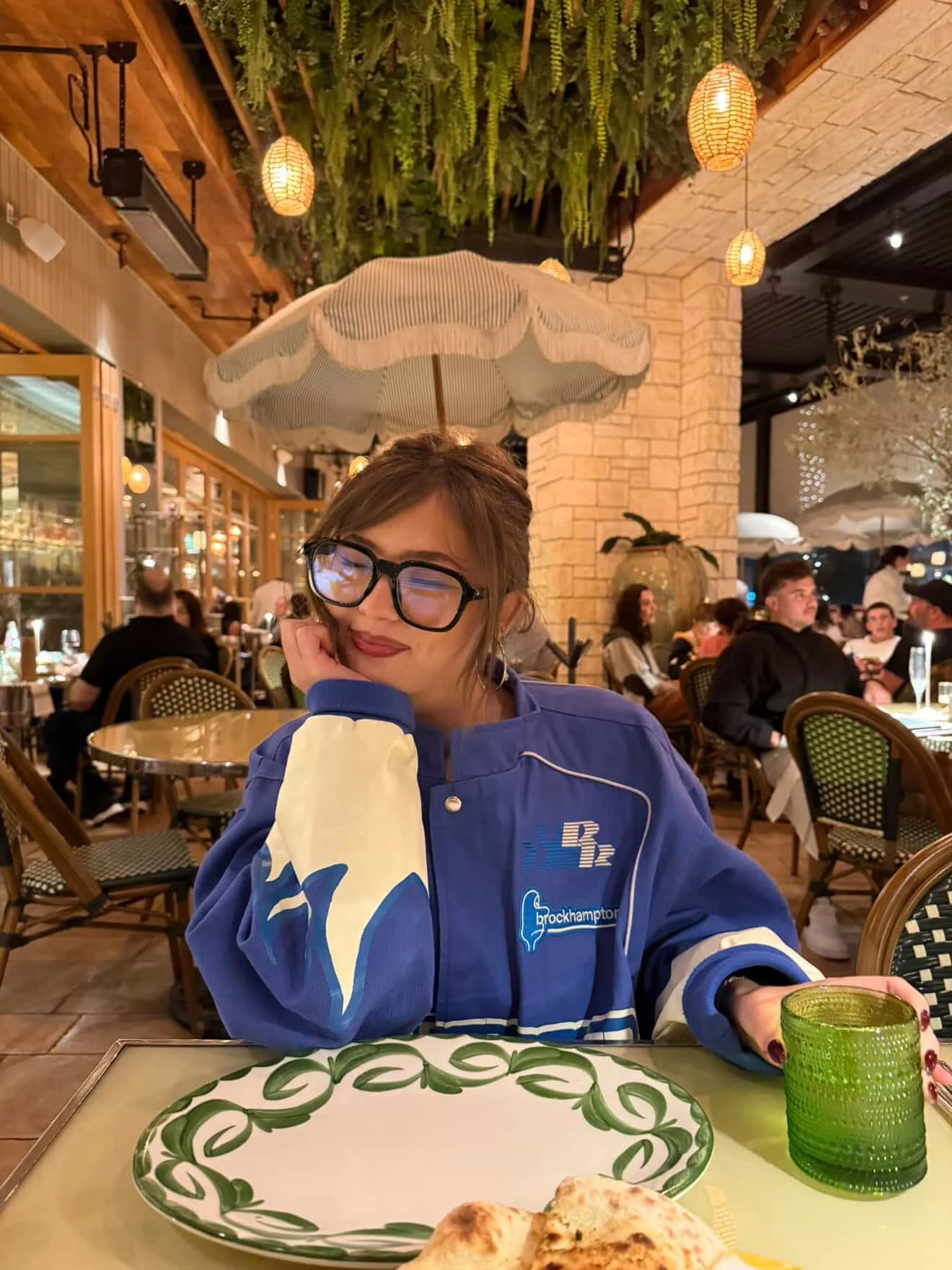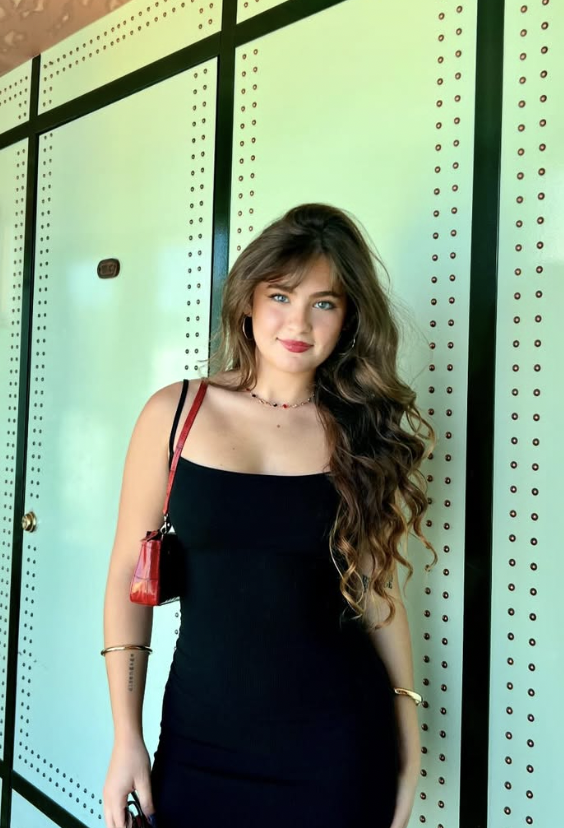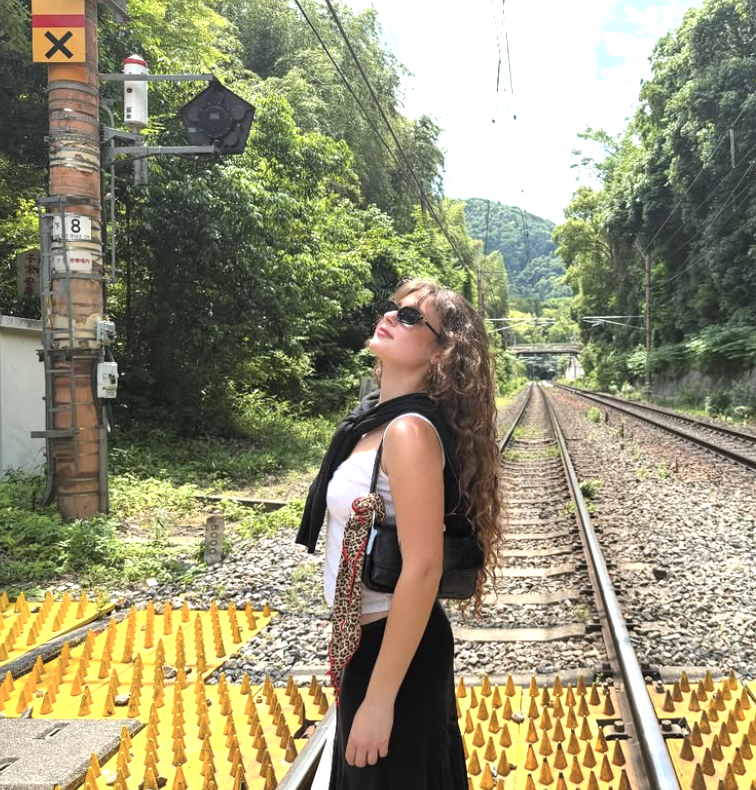
“Moving through life after a loved one walks out of it means you’ll probably always miss them, but time is the only thing that can truly heal that feeling. However, when you step outside of your comfort zone, time seems to pass much faster.”
- EMMA SHINA, 2025
Creative Resource: Tell me a little bit about yourself
Emma Shina: My name is Emma. I was born and raised in San Diego and studied marketing at San Diego State University. I have two dogs, Max and Ruby, and they’re literally my whole life. I adore them. I currently am working for a marketing agency in Downtown San Diego, and I am in charge of arranging partnerships with influencers. I interned there throughout college and loved it so much that working there felt like a super easy decision to make. Earlier this year I released a book called We’re All the Same. It was just one of those things where writing came so naturally to me, and since everyone in college is just faking it until they make it and trying to resonate with things they might not resonate with yet. I found myself feeling caught up since things weren’t really sticking in my life and it just robbed me of my motivation. On campus, there was this little turtle pond and I’d end up just sitting there and observing the turtles almost every day. I think it helped mend my relationship with people in a way through rediscovering the beauty of nature, life, and people. From there I just started writing poetry. By the end of college, I realized I had enough poems to publish a little book about them all. I did a lot of research and then ended up self-publishing my work on amazon and that was just incredibly rewarding. When it comes to creativity, I’m really focused on expression rather than the form that the art takes. Whether it was going to be written works or visual art, I just wanted to embrace it and publish it to mark those thoughts as a close to an old chapter and the start of a new one.
CR: A lot of people have shared the ways that nature gives inspiration for art since we live our lives in it. Along with the moments you had at the turtle pond, what parts of your life drew you deeper into poetry?
ES: I’ve always found strength in communication. Personally, I’ve always been able to find immense comfort in my abilities to share how I feel about things; one day I just opened my notebook, and with no expectation I began to write. It felt so natural for me since I put no pressure on myself or this newfound creative aspect of my life. Looking back, I just started it; I believe that being ready is just an action since doing things will get you so much further in life than planning for nothing. Leaning into what felt right ended up introducing me to this side of my creativity. I didn’t write anything if it felt like it couldn’t be finished the way that I wanted my poetry to be finished, and if I felt like I just couldn’t finish something I didn’t.
Creativity can feel like a chore when you’re trying to improve, and as those unfinished projects pile up in the corner, and that can be really overwhelming and stressful to the point where creativity is no longer something done out of love but for a sense of responsibility. Thankfully, I never felt that way with my poetry. I just let it flow naturally. There were months where I was writing five poems a day and some days when I was barely even writing at all. Keeping it as something that was a comfort to me as so important to my happiness with poetry, all to make sure that the outlet for overwhelming thoughts that I had would remain a comfort to myself.
CR: Was there ever a moment that you look back to in order to see how far you’ve come with your communication skills before poetry?
ES: When I published my book, all of these poems were roughly two years old. The delay in creativity coming to fruition is something that I feel like isn’t talked about enough; I saw this Billie Eilish interview where she’s talking about how she’s over all of these feelings that drove her past projects but she is still so incredibly proud of everything she’s done. When I think back to when I was writing these poems, I was really pulling at loose ends and so many moments where I didn’t have this closure. It had caused so much discomfort that I think if I didn’t write poetry, I’d go insane. I would say that I drew a lot from the things I went through when I was younger and the things I had learned when I was a teenager and being able to publish my poetry and wrap the hard parts of life up in a bow helped me close that chapter and leave it all in the past to go into my 20s with confidence and grace.
CR: You had mentioned that your poems have been written over the course of many years of your life and have been about endings and endings. Are there any specific human experiences that a lot of these are inspired by?
ES: In my book, I separate a lot of my poems by chapters. One of the topics of a chapter focused on the idea that we will all move further if we find similarities with others rather than differences. If you think of times where you’ve been hurt, a big defense mechanism that people often seek out in these moments of frustration is trying to distance themselves as much as possible from the person who hurt them. What I mean by this is rationalizing why we are a better person than they are for hurting us, whether it’s our friends supporting us by talking poorly of the person, or if we ourselves are telling ourselves that the other person is inconsiderate and that we would never do that to someone else. By letting yourself feel that, you’re able to get this frustration out. But after we get all that out, we have to switch into asking ourselves how we are similar to these people; to ask ourselves about the ways that we can empathize with their actions and their emotions. Maybe we really would’ve never done that, but honoring and finding the simplicities of what we could relate to is super important. Good can’t exist without evil, and if we put in the effort to find where we have things in common with people we might clash with then we can mature more and become better versions of ourselves over time.
Another topic that comes up a lot in my writing is the concept of aging and growing up as a woman. There are some poems about growing pains, and some poems that I would define as being ‘accidentally inspiring’. I’ve really been enjoying starting poems and stories with certain scenarios and concepts that feel very strange to people, but at the end of the poem, as strange as the introduction could be, the ending presents something to the reader to use as they wish in their lives. I really enjoy that kind of poetry because it’s the kind of thing that you can always call back on and have this sort of comfort that people have sought out for so long. A big part of why I feel as though this comfort is so universal is because the poems were so fitting for the time in my life. Reading it, it is obvious that there is a teenager who was hurting while writing this poem but also the poems portray feelings that almost everyone has or will be experiencing. More than anything I wanted to keep the youthful feeling of the writing because that’s what really made it relatable and impactful to people; I also wanted it to be something that I could go back to and reread to learn from my younger self if I needed that in the future.
CR: In your poem, you wrote about the familiarity and “aftertaste” of someone being in your life, including the line “I hope you’ll stay when I crave a familiar taste.” It is so easy to want to separate yourself from a person, but it is easier to miss them when they are gone. Is there anything from this poem that came from your perspective and offered more insight to your life?
ES: The hardest part about walking away from someone you love or someone that you really care about when it feels like you’re overstaying your welcome is always going to be the fear of missing them or feeling like someone that you can’t replace is going to be out of your life. If you’ve ever been in a platonic relationship and had to walk away, you just mourn that for so long. Aftertaste is an example of when I had to say goodbye to someone who had wronged me and and I just hadn’t set boundaries when I had needed to. It had just become the way that I lived at that time. I am definitely the kind of person who keeps giving second chances, but the truth of it all is that I’d rather lean into love than walk on eggshells in an attempt to protect myself from something that isn’t there. An overarching theme across the entire book has mostly just been adjusting to boundaries realizing themselves, and that feeling of potentially missing someone is just that feeling of those boundaries slipping in and changing things for the better. As a young woman, it can feel really easy to think that we owe things to people when that’s really not the case.
CR: While being on this topic of constant hesitation and caution towards life, how have you learned to manage those what-ifs and that fear of certain things happening?
ES: I realized that I had been living life with a really negative outlook on everything and assumed that I could never get over certain things. Young people like us often have tunnel vision about our lives, focusing only on our immediate circles of friends and the people we allow into them. Becoming comfortable with stepping outside of myself and the isolated identity I had created allowed me to surprise myself, which in turn invites new experiences you may have never encountered before. Of course, no one can perfectly replace or fill that empty space in your heart, but we can’t let ourselves get lost in the search for a replacement. Moving through life after a loved one walks out of it means you’ll probably always miss them, but time is the only thing that can truly heal that feeling. However, when you step outside of your comfort zone, time seems to pass much faster.
EMMA SHINA
MARCH 2026